

Butterflies to Black Bears: a Bioblitz in the Florida Wildlife Corridor
your questions, answered! 🐝
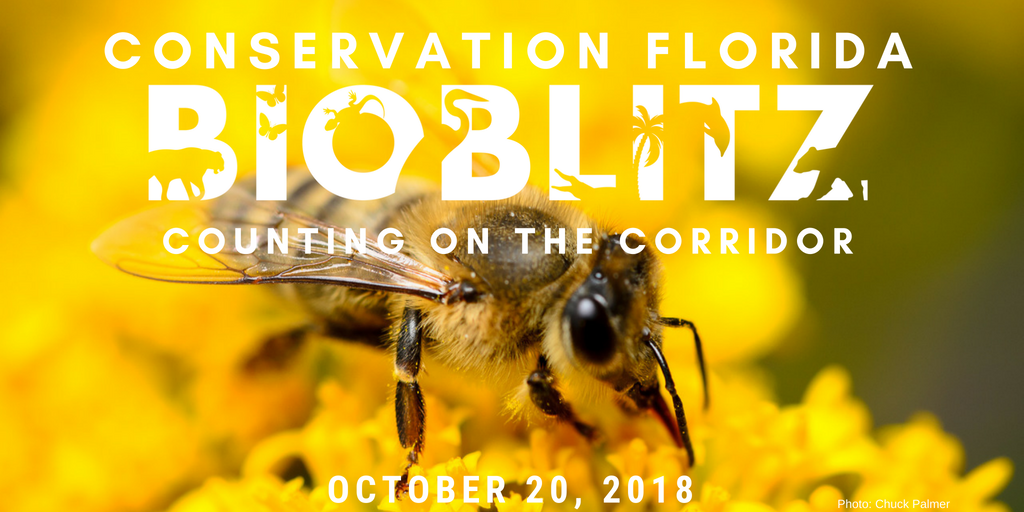
On October 20th, we’re hosting our statewide bioblitz: Counting on the Corridor! We’re connecting Floridians with the beauty and biodiversity of three conserved locations within the Florida Wildlife Corridor to highlight its incredible biodiversity, and ultimately the need for further protection. While we explore, we’ll be collecting useful data at three diverse habitats that are all critically necessary to our State.
At our upcoming bioblitz event, you can learn more about how Conservation Florida is saving land within the Florida Wildlife Corridor. You'll also have the chance to interact with Florida’s native species while learning from expert naturalists, and the data you collect could be useful in protecting the plants and animals that make up our unique ecosystems.
We thought you might have some questions, like:
What in the world is a bioblitz?
Our bioblitz welcomes people from all backgrounds to explore the land, engage in science, and connect with some of Florida’s most special places. It’s an opportunity for citizen scientists and experts alike to explore nature to find, count, and identify the biodiversity in an area. Participants come together to find, COUNT, and identify as many species of plants, animals, microbes, fungi, and other organisms as they can spot! You can learn more by watching this short video.
Florida is home to many unique species and diverse habitats. Counting on the Corridor allows citizen scientists of all skill levels and ages to explore pristine coastlines, crystal-clear springs, and open prairies. During our statewide bioblitz, the community of citizen-scientists will work with subject matter experts to count wildlife in three very different habitats.
We will have activities throughout the day that are designed to be fun and informative for families, community groups, and people of all ages and abilities.

OK, now what’s a wildlife corridor?
While the term “corridor” isn’t quite a buzzword, it may be one of the most important topics we can bring to the table in the conversation about conservation. Sometimes called a conservation corridor or greenway, a wildlife corridor is a piece of land or a habitat that links together two larger wildlife habitats. These connectors, if you will, allow wildlife to migrate and disperse on a large-scale. Corridors are crucial in Florida because they make sure local animals, like the Florida panther and the black bear, can move about freely. These pieces of land that serve as bridges between large, protected lands keep our biodiversity strong.
Now the question is, why do they matter?
Corridors are important because they lessen the fragmentation of natural landscapes. Florida is the third most populous state in the country, and it’s growing at a rapid pace. With all these newcomers, the demand for natural lands to develop is also increasing. Isolated land prohibits species from breeding with other populations, thus putting our biodiversity in danger. Even though we already have lots of protected sites in Florida, we still run the risk of losing important species when they are restricted to one location. Corridors offer a way to protect the habitat that plants and animals need most to survive.
…and we’ll be exploring the Florida Wildlife Corridor?
Yes! You may have heard of our friends, the Florida Wildlife Corridor, a nonprofit formed to promote the connection and protection of critical habitats. The “Florida Wildlife Corridor” is also a vision that many conservation groups share of a statewide network of permanently protected lands and waters. The vision is based on scientific research completed by the University of Florida to identify areas of high biological diversity in Florida.
Our bioblitz will emphasize the incredible biodiversity within the Florida Wildlife Corridor, which ultimately supports its continued and expanded protection. Conservation Florida supports the creation of The Florida Wildlife Corridor by protecting land that falls within the Corridor. The land we protect can be agricultural or natural as long as it provides a critical link between other protected lands. Take a look at our land protection map to see where we work.

At our upcoming bioblitz event, Counting on the Corridor, you can learn more about how Conservation Florida is saving land within the Florida Wildlife Corridor. You'll also have the chance to interact with Florida’s native species while learning from expert naturalists, and the data you collect could be useful in protecting the plants and animals that make up our unique ecosystems.
Why these locations?
Our bioblitz will be hosted in three different locations across the state that are located within the corridor: St. Marks National Wildlife Refuge, Alexander Springs Recreation Area, and Kissimmee Prairie State Park. We are featuring a coastal habitat that should be encountering annual monarch butterfly migration, a sand pine scrub forest with a first magnitude spring, and a dry prairie. All three locations fall within the Florida Wildlife Corridor and offer a snapshot of Florida’s vast habitat diversity.
How should I prepare to participate?
First, register here.

Then, plan as you would for any daylong adventure in the great outdoors. Some of the activities are guided hikes that require a considerable amount of walking on trails that might be difficult to navigate. Some activities occur on and in the water. You may encounter a variety of wildlife, including: snakes, mosquitoes, ticks, spiders, tortoises, birds, and butterflies. You should wear comfortable walking shoes and bring sunscreen, bug spray, protective clothing, and water. You will also want to check the weather and download a map to your location ahead of time in case cell service is not available along your route.
How do I record what I see?
If you haven't already done so, please download the iNaturalist app to your smartphone. This app allows you to record your observations directly to Conserve Florida's bioblitz project. Please visit the iNaturalist tutorials for more information and join our iNaturalist project here. Select the location where you plan to participate and record your findings on the day of the event! You can also share your experience on social media using #flbioblitz.
Who should attend?
Everyone! We will have activities throughout the day that are designed to be fun and informative for families, community groups, and people of all ages and abilities. A smartphone is required to participate in the species cataloging activities but not needed to enjoy learning about and experiencing natural Florida.
How much does it cost?
The event is free, but park entry fees may apply. If you would like to make a donation to Conservation Florida to help support our exciting work to protect natural lands in Florida, you may donate here.
What if I have more questions?
We're here for you. Reach out to us at info@conserveflorida.org.
Join us at Counting On The Corridor on October 20th to observe, enjoy, and count all of the biodiversity that Florida has to offer!

Sampala Lake Ranch: Old Bones, Old Roads, Old Homes, Old Souls
by Lisa Gearen
If you can’t feel history here, you can’t feel it anywhere.
Story by Lisa Gearen
Photos by Randy Batista

In March, photographer Randy Batista, CTF consultant Keith Fountain, and I were invited by R.N. (“Koby”) and Charlene Koblegard to visit their Sampala Lake Ranch for the day. Acting on their remarkable love for the land that they have stewarded for over a decade, they worked with CTF to place a conservation easement that will protect it from development. High, dry and beautiful, with a clearwater lake, ample groundwater resources, rolling topography, and located about 40 minutes’ drive from Tallahassee, their property offers the kind of landscape that would make it ripe for future suburban development. The Koblegards, having witnessed the intent of Bud Adams in protecting his south Florida ranches with conservation easements, have chosen to take the same measures to ensure that it will remain as it is, forever. Bud Adams was a lifelong friend to Florida, her creatures and her people. He died in September of 2017.
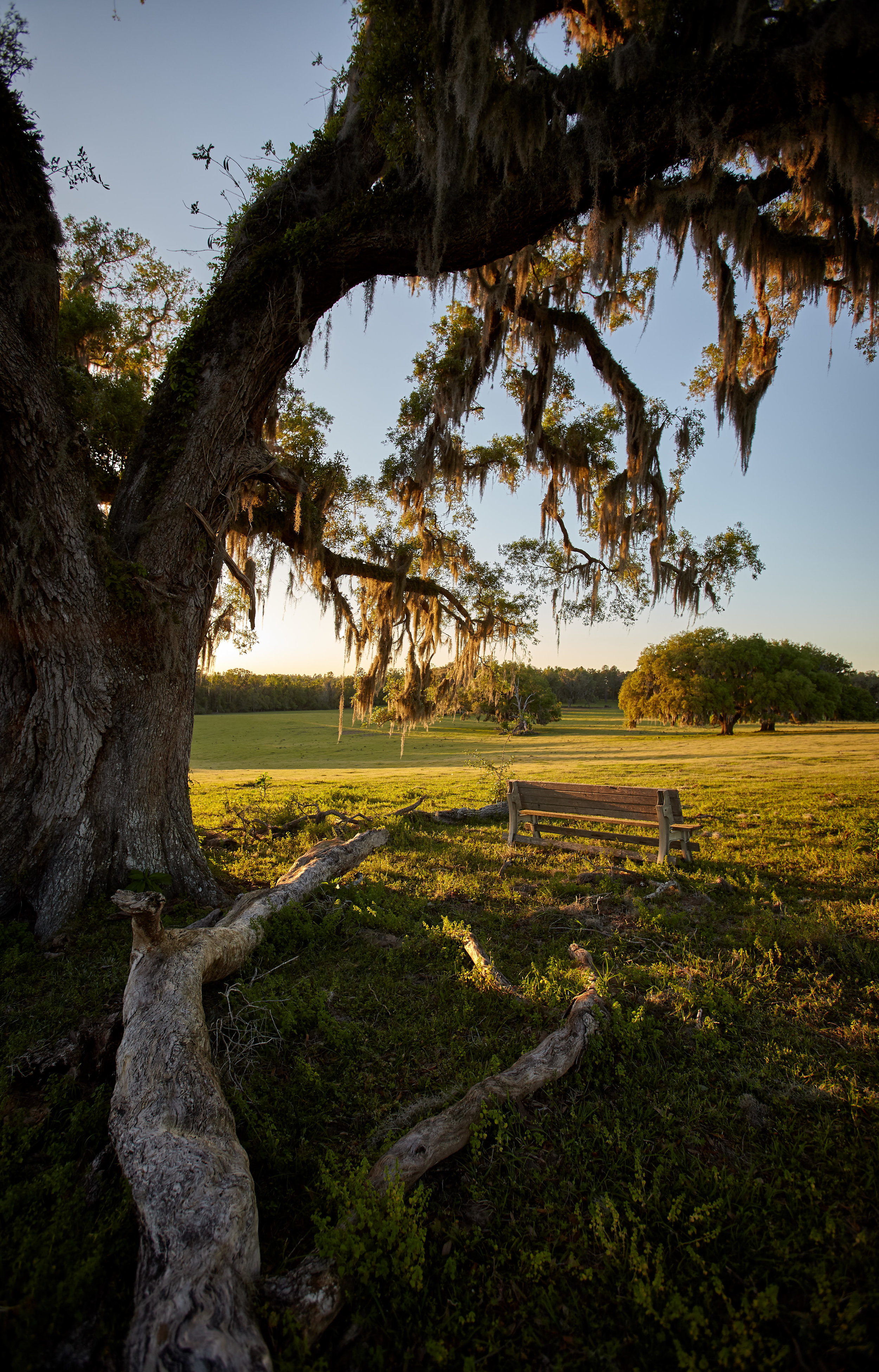
I’m walking the grounds of Sampala Lake Ranch on the day before Easter. The wind gusts, calms, and shifts direction. The day started gray and damp, but by noon the sky is Florida-blue and the air is crisp. It has become the perfect day to follow the sunken road that is the Old Spanish Trail, as it borders the ranch property and winds through ancient live oak groves and piney woods. In a few miles, it delivers us to a high bluff that overlooks a clearwater lake. This lake has supported life in this part of the world for tens of thousands of years.
Historians and archaeologists have identified the lake shore as the likely site of a colonial Spanish mission, built and fortified during the 17th Century. It is believed to have been called San Pedro y San Pablo de Potohiriba, a name that has evolved to “Sampala" over the centuries. The mission, part of an ambitious Spanish plan to secure a route for ground travel from Saint Augustine to present-day Pensacola, was probably built on or near an earlier Native American village. The route, called Camino Real - or King’s Road - played a crucial role in the expansion of Spanish colonization in the New World. Numerous missions, some of them quite sophisticated, served the dual roles of providing way stations for travelers and spreading Christianity to native populations. Sampala, with its spring-fed freshwater lake, was a reliable place to find water, food and shelter. Located about one third of the way between Saint Augustine and Pensacola, I can easily imagine a steady flow of pedestrians, riders, and cart drivers. In good weather, it must have been a very busy place, and in bad weather, it must have provided lifesaving refuge, perhaps for days at a time. The Spanish and Native Americans co-existed, sometimes peacefully, sometimes not, in the area for decades. British attacks and slave raids in the early 1700s eventually caused the Native Americans and Spanish to abandon the site and move to the protection of St. Augustine.

Leaving the lake, I walk along a path of desire that has been carved by the hooves of nearly 200 Koblegard cows. These cows share their genes with the Braford herd that was established at the Adams Ranch in Fort Pierce, and the family resemblance is plain to see. The cattle, following their instincts and communicating across generations, move through the pastures and woods, roaming in search of the best grass and the shadiest resting spots. Here and there, I find fossilized bones of their predecessors, the remains of animal inhabitants that have lived on this land throughout historic and prehistoric times. Fox squirrels escort me as I move through the piney highlands that border this pasture. Standing at attention and apparently without fear, they gaze for long minutes until resuming their private games of hide-and-seek. Overhead, bald eagles, swallow-tailed kites, hawks and numerous song birds fly through pristine air. They have everything they need here to live their lives and bring up their young.

Later in the day, we meet up with the Koblegards while they clean out bluebird boxes in a central pasture area. Nearby is a carefully positioned bench where the two have spent many hours watching the light change with sunsets, observed communities of wild turkeys, and enjoyed the antics of calves. With obvious affection, Kobe relates to us the story of his lifelong friendship with Bud Adams and stories of how the Koblegard and Adams families have been woven together through friendship and a shared love of Florida. As he talks about Bud, Kobe’s profound respect is apparent. Looking toward the late day sun, he tells us his story of Sampala. In 2004, Koby and Bud purchased the original ranch, and divided the property to allow for separate cattle operations. They had looked at several properties in the area, but as Koby says, "when I saw this, I tried to hide my excitement from the realtor.” While intended as a cattle ranch, the place also became a family retreat for the Koblegards. Early on, they built a cottage and put in flower and vegetable gardens. As the family grew, the cottage was enlarged and has been the site of numerous Labor Day and Thanksgiving celebrations, as well as other family events. Grown children and many grandchildren have known the place and loved it for more than 13 years.
As time passed, the friendship and neighboring experience deepened. Bud’s commitment to land conservation eventually influenced the Koblegards’ decision to protect their property through a conservation easement. Guided through the process by CTF, they made application through the State of Florida’s Rural and Family Lands Program. The Florida Cabinet voted to purchase the easement in early March of this year. And as I write this, Bud Adams’ heirs are preparing to pursue a conservation easement on the adjacent Adams’ parcel, ensuring perpetual protection of 2,400 contiguous acres, including the entire 100-acre lake and its watershed.
As Kobe and Charlene head back to the house and their supper, Kobe directs us to the location of an original early 20th-century ranch homestead, hidden behind an old gate. We find it without difficulty and come upon a classic Florida farmhouse that was almost certainly a showplace in its day. With the floor missing and fewer than half the original windows still in place, the bones of its fundamental elegance endure, despite the ruin. I imagine the builders of that home, designing the floor plan, choosing the wood finishes, the detail of the crown molding. I imagine a young, ambitious farmer/rancher and his bride, moving south out of town, as the new US Highway 90 opened the way west for the drivers and passengers of the new, mass produced “automobile.” They situated their home to take advantage of the prevailing breezes, with an eternal pasture vista and oriented the front porch toward the rising sun and the back porch toward the dusk. As it should be.
It’s late afternoon, almost evening, when we circle back on the ranch to allow Randy to photograph the pastures in the best light of the day. He wanders off to find the vistas that will tell his story, and we wait for the full moon to rise in the east. Bats appear, then a few stars. A small herd of cows, vocalizing to each other, move in our direction, intending to bed down under the grandmother live oak that spreads her limbs across the hill where we wait. The cows eventually encircle us, quieting as the dark advances. The place is so quiet, we can hear their breath as dark descends.
“If you can’t feel history here, you can’t feel it anywhere.”
With no light to work with, it’s time for us to pack it in. We load the car and drive back across the pasture, skirt the bluffs, and find the gate. Before turning toward home, I aim the car in the wrong direction, back toward the stretch of camino that still embraces travelers with its 12-foot-high walls, a grotto created over centuries by countless incising feet, hooves, and wheels. Ferns and fossils appear in relief as my headlights illuminate the vertical surfaces. I feel a chill and think: If you can’t feel history here, you can’t feel it anywhere. Finally, with low beams on, I turn the car around and follow the sunken, dusty single-lane path, whose earthen depression bears witness to the history that engineered this route, over hundreds, maybe thousands, of years. In a mile or two, the banks dissolve and the pavement lifts our vehicle. Old friend moon makes its appearance, and we are on our way.
Thanks to my time-traveler partners, Randy Batista and Keith Fountain. And special thanks to Dr. Gifford Waters, PhD, who provided background for this story.