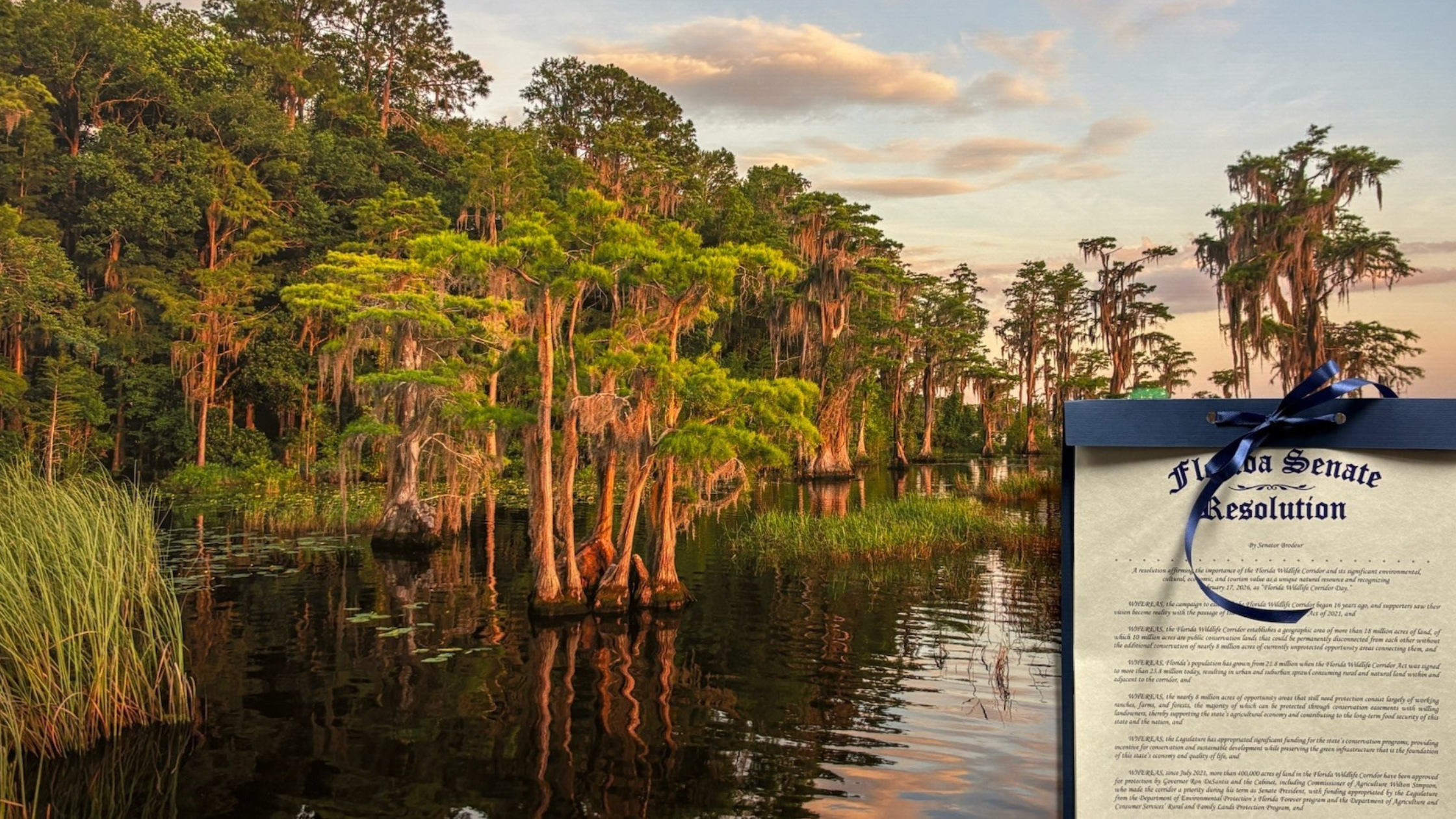
Landscape photo by Lauren Yoho of Wildpath
Partners Toast Five Years Since Passage of the Florida Wildlife Corridor Act
TALLAHASSEE, Fla. (Feb. 18, 2026) — Yesterday, Conservation Florida co-hosted the Florida Wildlife Corridor Reception at the Florida Capitol for the fifth consecutive year, welcoming lawmakers, agency leaders, landowners, conservation partners, and advocates from across the state. The celebration marked five years since the passage of the Florida Wildlife Corridor Act and underscored the real and growing momentum behind Florida’s bipartisan commitment to land conservation.
The event was co-hosted with partners Wildpath and the Florida Wildlife Corridor Foundation and honored the 18 million acre Florida Wildlife Corridor, a connected network of working farms and ranches, forests, wetlands, and wildlife habitat stretching from the Panhandle to the Everglades.
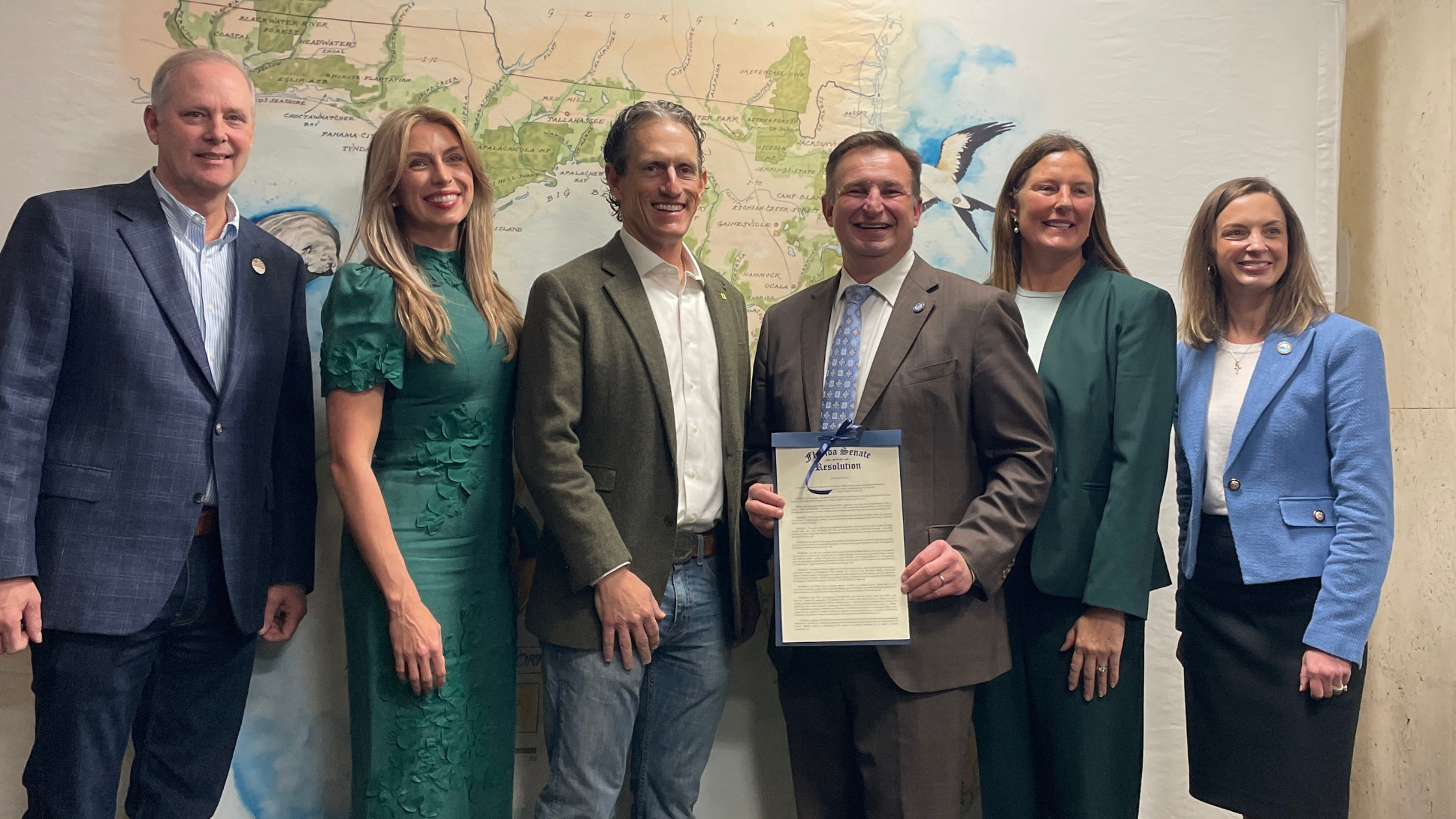
From left to right: Commissioner of Agriculture Wilton Simpson; Conservation Florida CEO Traci Deen; Wildpath Founder Carlton Ward Jr.; Senator Jason Brodeur; Florida Wildlife Corridor Foundation CEO Mallory Dimmitt; Florida Department of Environmental Protection Secretary Alexis Lambert
Now in its fifth year as co-host, Conservation Florida has helped grow the Legislative Reception into a signature gathering that demonstrates the strength, durability, and broad support behind conservation in the Sunshine State. The packed room reflected that momentum, bringing together state leaders, nonprofits, agencies, landowners, and conservationists united around a shared goal to protect the lands and waters that define Florida.
The event reinforced what has been true since the Corridor Act passed unanimously in 2021. Land conservation remains firmly bipartisan.
Conservation Florida CEO Traci Deen delivered passionate remarks to the full room alongside Commissioner of Agriculture Wilton Simpson, Florida Department of Environmental Protection Secretary Alexis Lambert, Senator Jason Brodeur, Mallory Dimmitt of the Florida Wildlife Corridor Foundation, and Carlton Ward Jr. of Wildpath.
“There’s nothing partisan about clean air, clean water and animals traversing the state where we grow our food.”
“There’s nothing partisan about clean air, clean water and animals traversing the state where we grow our food,” said Commissioner of Agriculture Wilton Simpson. “It’s too important to the state of Florida for this to be a partisan issue.”
Five years ago, Conservation Florida worked alongside partners and state leaders to advance and pass the Florida Wildlife Corridor Act, which formally recognized the Corridor geography as a statewide conservation priority. Since then, Florida has grown by 2 million residents, intensifying the need for thoughtful planning, strategic land protection, and continued funding for land conservation efforts.
“Florida is changing rapidly before our eyes. The pressure on our land, water, wildlife, and working landscapes is real, and it is accelerating,” said Conservation Florida CEO Traci Deen to the room.
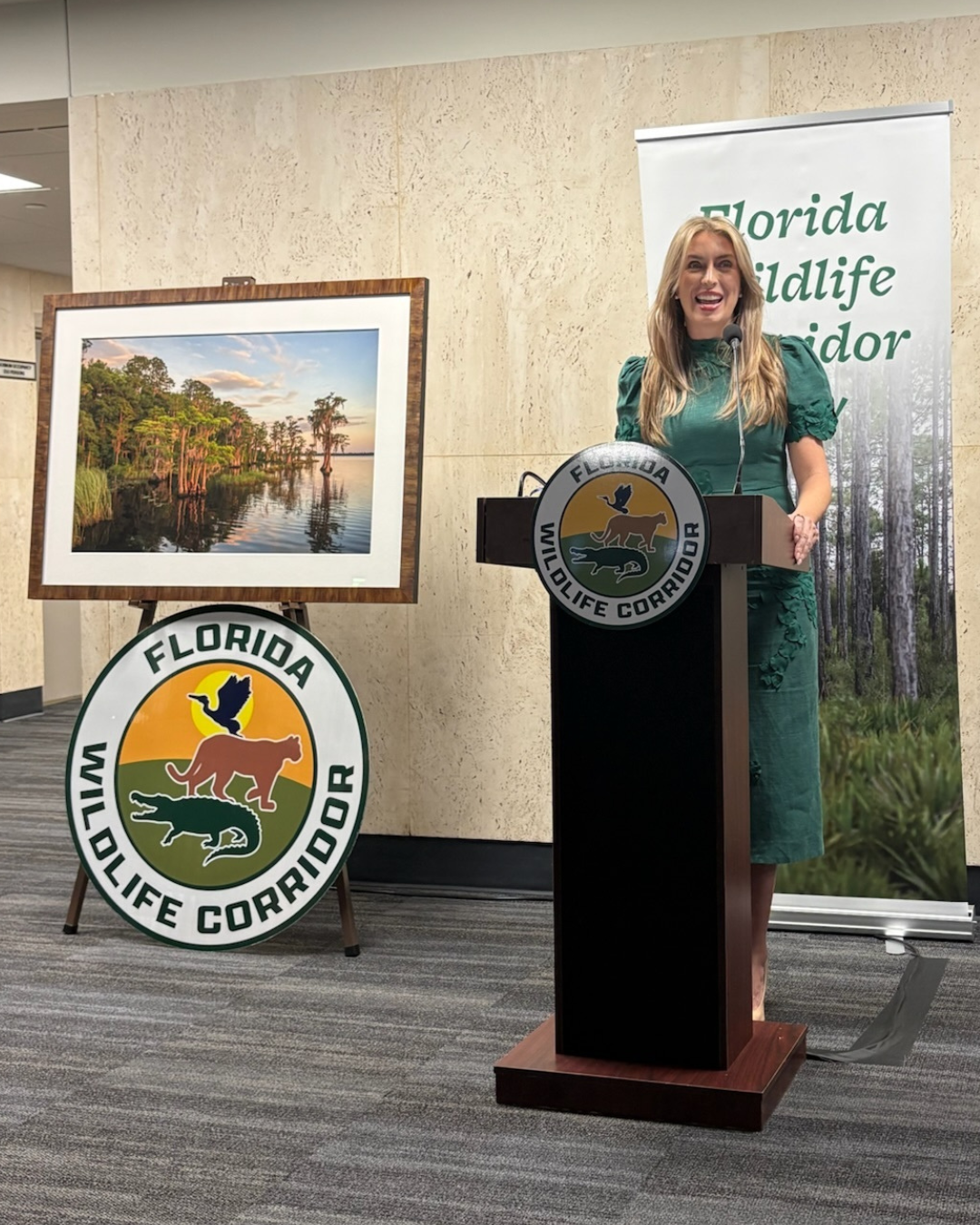
But Deen made clear that the evening was not centered on pressure. It was about hope and progress.
“In the very same five years that Florida has grown at record pace, our state leaders have demonstrated strong leadership on this. They have prioritized land conservation. They have funded our land protection programs. And together, have approved 463,000 acres for permanent protection.”
That progress reflects sustained legislative investment in our state’s cornerstone programs, the Rural and Family Lands Protection Program and Florida Forever.
“Together we have approved 463,000 acres for permanent protection. That is not just a number. Its family farms, freshwater safeguarded, trails opened. It’s our home.”
During her remarks, Deen emphasized that this success is the result of broad collaboration across sectors and communities.
“The many hands and hearts behind this work. The land trusts moving conservation forward every day. The philanthropists investing boldly in Florida’s future. The storytellers who help people see what is at stake. The nonprofits, federal and local partners, corporate leaders, artists, scientists, and community advocates who understand that conservation is not partisan, it is foundational, and it’s Floridian.”
February 17, 2026 was officially recognized as Florida Wildlife Corridor Day on the Senate floor by Senator Jason Brodeur, commemorating the milestone and celebrating the measurable progress achieved since the Act’s passage.
“What makes the Corridor so powerful is not just the acreage but the alignment of public support, legislative leadership, executive action, and private partnerships, all working toward a Florida that grows responsibly and endures,” said Florida Department of Environmental Protection Secretary Alexis Lambert.
As the state continues to experience rapid population growth and development pressure, leaders at the event underscored the importance of maintaining strong and consistent funding for land conservation programs to ensure that Florida’s natural and working lands remain intact for future generations.
Conservation Florida remains committed to turning policy and advocacy into partnerships and permanently protected places. Through science-driven land protection, partnerships with willing landowners, and collaboration with state leaders, the nonprofit continues to conserve priority lands across the state and advance the vision formalized in the Florida Wildlife Corridor Act.
“The last five years have shown what is possible when we work together,” Deen shared. “Imagine what the next five can bring.”
Visit www.conservationflorida.org to learn more.
“Conservation is not partisan, it is foundational, and it’s Floridian.”
For more information, contact:
Sarah Shepard, Communications Director
About Conservation Florida:
Conservation Florida is an accredited, nonprofit land conservancy dedicated to conserving the Sunshine State’s water, wildlife, wild places — the places that make Florida home. Since its founding in 1999, Conservation Florida has saved roughly 45,000 acres, serving all 67 counties in Florida, by prioritizing strategic and evidence-based land protection, education, and advocacy.