
News
CTF Projects Make Top Tier
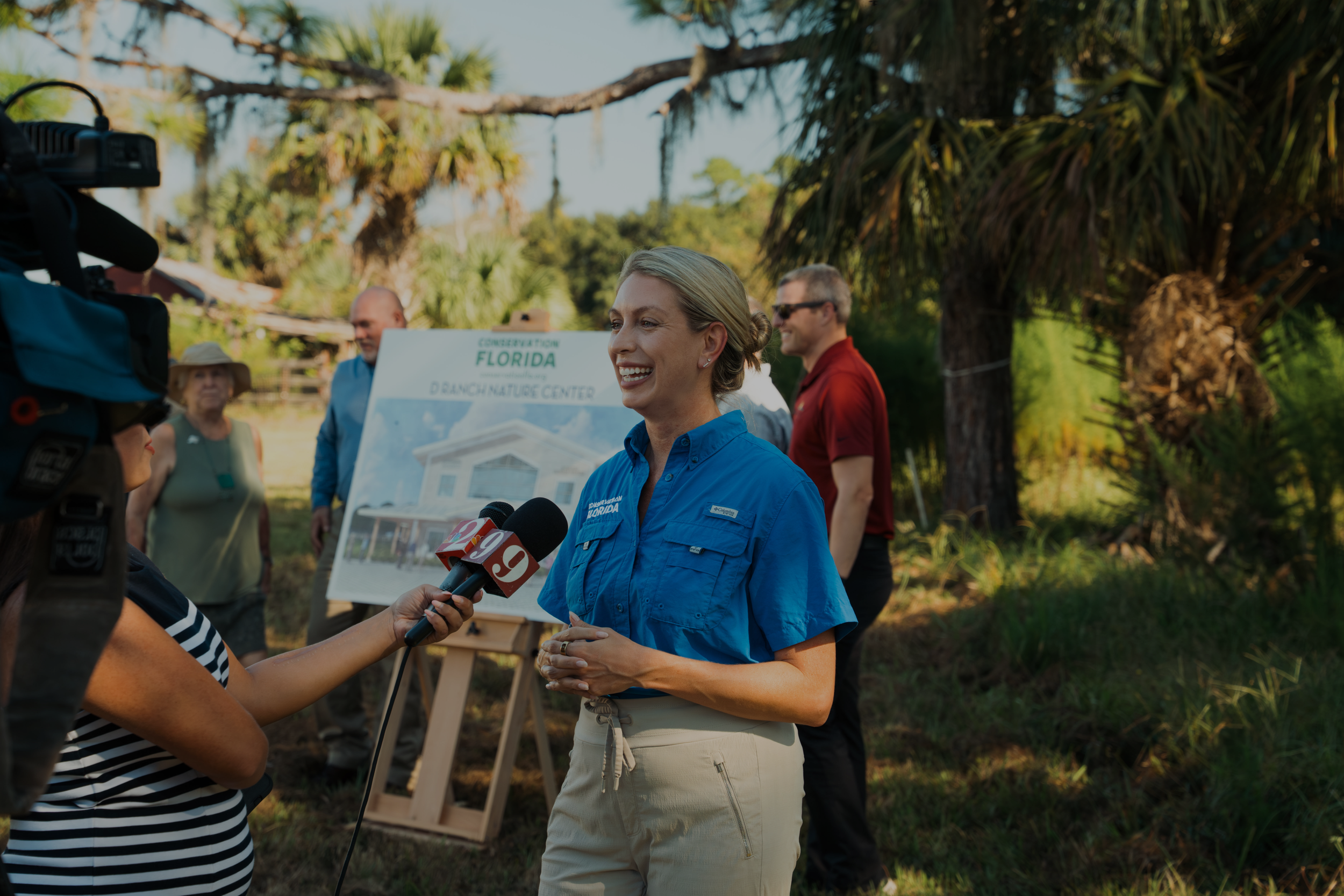
Seven of our projects were selected by the Rural and Family Lands Protection Program for their top tier, which makes them eligible for funding next year.
A Great Day for Projects!
On September 3rd, the Florida Forest Service’s Rural and Family Lands Protection Program (RFLPP) Selection Committee met all day in Bartow to rank 70 applications for funding next year.
The Rural and Family Lands program protects agricultural lands from conversion to non-agricultural land uses, and secondarily protects conservation values important to the landowner and the Florida Forest Service.
The Conservation Trust for Florida was affiliated with 11 of the 70 applications. Of these 11 projects, which total over 54,800 acres, seven properties were ranked in the top tier and will be eligible for funding next year.
We worked with the landowners of these seven top-tier properties, which total over 45,000 acres. These projects are dispersed throughout Peninsular Florida and include forests surrounding north Florida springs and ranches in the Everglades Headwaters region.
We are one step closer to achieving our goal of protected rural lands and intact wildlife corridors!
Our ranked projects are:
- Adams Ranch, Osceola County (24,000 acres)
- Rainey Pasture, Marion County (5,100 acres)
- Heart Bar IV Ranch, Osceola County (5,000 acres)
- Double C Bar Ranch, Osceola County (4,100 acres)
- Sampala Lake Ranch, Madison County (2,200 acres)
- Canaan Ranch, Gilchrist County (3,200 acres)
- Todd Clemons Unit One, Okeechobee County (1,900 acres)
These seven projects were selected by the Rural and Family Lands Protection Program for their top tier, which makes them eligible for funding next year.
Advocate for Amendment 1
Amendment 1 was an incredible win for conservation in Florida, but the victory will not be complete until elected leaders implement legislation that will fund land conservation using this dedicated stream of funding.
Legislation Needed to Fulfill Amendment 1
Solitude at Sunrise • Silver River State Park. ©John Moran, johnmoranphoto.com
In November, Florida voters overwhelmingly approved Amendment 1, the Water and Land Conservation Amendment. The Amendment dedicates 33% of the existing excise tax on documents for the next 20 years to the Land Acquisition Trust Fund to acquire, restore, improve and manage conservation lands.
This was an incredible win for conservation in Florida, but the victory will not be complete until elected leaders implement legislation that will fund land conservation using this dedicated stream of funding.
You can help!
Right now your legislative leaders are gearing up for the upcoming Legislative Session, which begins on March 3. They are holding committee and planning meetings now and need to hear from their constituents on this issue.
Please take a moment to contact your state representative and senator and tell them that you, along with 75% of all voters in the state of Florida, agree that the purpose of Amendment 1 is to revive state spending to its highest allowable limits for existing land and water conservation programs that has not been supplied by the Legislature in recent years.
Find Your Legislators
You can find contact information for your state representative and senator here: http://www.myfloridahouse.gov/Sections/Representatives/myrepresentative.aspx
More Resources
The Conservation Trust for Florida is a member of Florida’s Water and Land Legacy. This coalition of civic organizations and businesses maintains an excellent website with tools, background information, and updates.
- For talking points, click here: http://floridawaterlandlegacy.org/sections/page/talkingpoints
- For a legislative toolkit, which includes helpful tips on setting up effective meetings with your legislators, click here: http://floridawaterlandlegacy.org/sections/page/legitoolkit
- For sample text, click here: http://floridawaterlandlegacy.org/sections/action/takeaction
Little Orange Creek Preserve
Conservation Trust for Florida (CTF) and Alachua Conservation Trust (ACT) with help from other partners associated with the North Florida Wetlands Conservation Project (NFWCP) acquired an important 390-acre addition to the 1,900-acre complex of conservation lands known as Little Orange Creek Preserve early in 2013.
The 1,900-acre Little Orange Creek Preserve (LOCP) is located just northeast of the City of Hawthorne. Much of LOCP is basin swamp with cypress, tupelo, and red maple trees. The uplands were historically sandhill and flatwoods, but were converted to planted pine many years ago. The varied habitats support a wonderful diversity of animals and plants. Bears have often been photographed by trail cameras, and they are known to traverse the preserve. Other predators that roam freely include bobcats, coyotes, and otters. The freshwater marshes and swamps add to important stopovers for migratory birds along the Atlantic Flyway. They also provide critical year-round habitat for many wetland-dependent plant and animal species.
Although recreational opportunities on the property are extremely limited, eventually there will be a network of trails that connect with the adjacent City of Hawthorne’s Little Orange Creek Nature Park. There also is considerable work ahead to return these lands to a more natural state. The restoration and management of LOCP will be coordinated between the various government and non-profit organizations involved. Uplands restoration will include thinning, prescribed burns, and planting.
Conservation Trust for Florida (CTF) and Alachua Conservation Trust (ACT) with help from other partners associated with the North Florida Wetlands Conservation Project (NFWCP) acquired an important 390-acre addition to the 1,900-acre complex of conservation lands known as Little Orange Creek Preserve early in 2013. CTF, ACT, the Putnam Land Conservancy (PLC), and the City of Hawthorne are members of the Little Orange Creek Partners Land Management Committee. The purchase was made possible with federal funds from the North American Wetlands Conservation Act (NAWCA), and represents another successful partnership of the NFWCP to apply this funding source in the region. To date, more than 8000-acres have been protected in the first four phases of the NFWCP, which will complement tens of thousands of acres of nearby conservation lands, including Paynes Prairie Preserve State Park (~21,000 acres), Lochloosa Wildlife Conservation Area (~28,000 acres), and others. Previous NFWCP phases include: Kanapaha Prairie Preserve, Tuscawilla Preserve, Barr Hammock Preserve, Levy Lake/Whitehurst tract, and Little Orange Creek Preserve (western part).
Nayfield Acres Conservation Easement
The conservation easement on the Nayfield’s property helps protect the Suwannee River watershed. Your support helps CTF manage such conservation easements across the state.
The 136-acre Nayfield Acres Conservation Easement adds to protected lands within the Suwannee River corridor. The land is adjacent to the Big Shoals Conservation Area, and contains a seepage spring and creek system that drains into the Suwannee River. These lands serve as a buffer to the protected state lands by providing additional wildlife habitat, protecting water quality, and preventing soil erosion, as well as providing scenic amenity to the hiking trails located within Big Shoals Conservation Area.The Nayfields have begun to restore the cleared portions of the property by planting long leaf pine. The property is used for recreational activities such as camping, hiking, hunting, and wildlife viewing.
Harzig Santa Fe Conservation Easement
One of the most special aspects of the Hartzog easement is 29 acres of bottomland hardwood and approximately 2000 feet of undeveloped river frontage visible to the public from the Santa Fe River.
Large, privately held, undeveloped parcels with significant river frontage on the Santa Fe River are a rarity today. These parcels are significant for many reasons, including protecting water resources, providing habitat to important species, and providing scenic amenity and open space in an increasingly developed landscape. The Hartzogs chose to donate a conservation easement on their 117-acre parcel on the Santa Fe River to protect these qualities on their land.
The Hartzogs are working to restore native long leaf pines to part of the property, and plan to use the property in a recreational and educational manner. They hope to be able to share their property with individuals who have limited contact with nature or who are handicapped.
Webber Cedar Lakes Ranch & Nature Preserve
Maximizing wildlife habitat in the wooded areas of the Webber Cedar Lakes Ranch and Nature Preserve Conservation Easement is a management priority.
The Webber Cedar Lakes Ranch and Nature Preserve Conservation Easement, donated to CTF on December 23, 2008, is a 54-acre parcel owned by Dr. Raymond T. Webber. The karst topography and nature of the property makes it a significant contributor to protecting water quality and quantity in Levy County, Florida, and the surrounding region. The property is adjacent to Devil’s Den, a spring, and popular diving destination.
One of the management goals is to maximize wildlife habitat of the woods and eliminate invasive exotic vegetation.
CTF Project Moves Forward: Cabinet Approves Adams Ranch
Adams Ranch provides stewardship for a landscape-sized wildlife corridor connecting other managed lands.
Photo by Carlton Ward
The Conservation Trust for Florida, Inc. is excited to announce that the Governor and Cabinet approved the option to purchase a conservation easement on 1,536 acres of the Adams Ranch on Tuesday, December 9th!
The Conservation Trust facilitated a joint acquisition project for the Florida Forest Service and the Natural Resource Conservation Service to purchase the conservation easement on the ranch.
Adams Ranch, Inc. is the 12th largest cow/calf operation in the United States. Their 24,000-acre Lake Marian Ranch lies in the heart of the recently authorized Everglades Headwaters National Wildlife Refuge and Conservation Area. This refuge seeks to protect the imperiled habitats and rare species of the Northern Everglades, much of which is on some of Florida’s largest ranches.
Adams Ranch not only manages a world-class cow/calf operation, but they are also tremendous stewards of a native landscape of hammocks, southern longleaf pine flatwoods, rare dry prairie, and a landscape-sized wildlife corridor connecting other managed lands.
Quail Roost Conservation Easement
“I’ve also come to believe that each of us must assume the responsibility of preserving the wildness that remains — so that our children, and theirs, may come to know such beauty; and, quite possibly, for the very survival of us all.”
Following the death of his parents, just months apart in 2003, Kerry Heubeck worked with CTF to protect and limit development on approximately 800 acres of their 1,000 acre farm, Quail Roost II. A conservation easement was used to protect 200 acres, and deed restrictions controlled the possible development of another 600 acres. These protections were instituted as a memorial to his parents, Harriet and Elmer Heubeck, Jr. who both held a deep love for the land upon which they lived and worked.
The Heubecks have long been recognized as pioneers in the Florida Thoroughbred Horse industry. Their name is routinely and justly associated with that of Rosemere, the first Thoroughbred farm in Marion County, as well as Hobeau Farm, for years one of the nation’s leading Thoroughbred breeding establishments and racing stables. Nevertheless, it was their own Quail Roost Farm to which family and friends attach their fondest memories. It was this original Quail Roost that was so unique, bringing together under their aegis one of Florida’s best known Thoroughbred breeding and training venues, a large purebred and commercial beef operation, and one of the finest private exotic game preserves in the nation.
In dedicating the Quail Roost Conservation Easement to their memory, Kerry stated, “Some sixty years ago my parents brought me to an exquisite land, where I had the luxury of growing up surrounded by lush green Florida hammocks, crystal-clear springs, and an abundance of wildlife unimaginable today. That particular landscape is now mostly buried beneath concrete and asphalt. Before they died, each of my parents spoke of protecting the land. I’ve also come to believe that each of us must assume the responsibility of preserving the wildness that remains — so that our children, and theirs, may come to know such beauty; and, quite possibly, for the very survival of us all.”
Price's Scrub
Price’s Scrub is continuing ecological restoration and is open to the public for light recreation such as hiking and horseback riding.
Working with the state Office of Greenways and Trails, CTF helped protect Price’s Scrub, a unique 952-acre sand pine and pond pine system with saw palmetto understory. Price’s Scrub is continuing ecological restoration and is open to the public for light recreation such as hiking and horseback riding. These properties are an important connection in the effort to create a recreational corridor, primarily for horseback riding, from Payne’s Prairie Sate Preserve to Goethe State Forest.
Lochloosa Nature Preserve
The 1,388-acre parcel, surrounded by the Lochloosa Wildlife Conservation Area, boasts some of the best remaining longleaf pine flatwoods and sandhill habitat in the county.
CTF nominated the Lochloosa Nature Preserve for acquisition by the Alachua County Forever land conservation program. The project was approved for acquisition in October 2003. The 1,388-acre parcel, surrounded by the Lochloosa Wildlife Conservation Area, boasts some of the best remaining longleaf pine flatwoods and sandhill habitat in the county.
Barr Hammock Preserve
Overall, there are 5,719 acres to the Barr Hammock preserve, making it the largest of Alachua county’s conservation acquisitions.
In 2002, CTF nominated Barr Hammock for acquisition. Using Alachua County Forever funds, the Alachua County Commission purchased this prized property, furthering our commitment to help create a recreational, landscape-level corridor that runs through Alachua and Marion Counties. Overall, there are 5,719 acres to the Barr Hammock preserve, making it the largest of Alachua county’s conservation acquisitions. Barr Hammock connects Payne’s Prairie State Preserve to the Ocala National Forest and Goethe State Forest, keeping intact entire ecosystems, wildlife populations and the largest wetlands in Alachua County – Ledwith and Levy Prairies. Barr Hammock and its surrounding uplands are some of the most important ecologically intact examples of prairie/lake ecosystems in north central Florida. Its protection preserves significant prehistoric archaeological sites and will provide the citizens of Florida with a beautiful space for recreational activities such as bird watching and hiking.
Hansen Preserve
“I worried about what would happen to it when I was no longer around. After a number of efforts, trials, and errors, the Conservation Trust for Florida solved my problem,” said Phyllis Hansen, landowner.
Phyllis Hansen (on left), recipient of a Land Conservation Award, was introduced by her long-time friend and fellow Cross Creek resident Kate Barnes. Photo by Ed Geers.
Cross Creek is a special place with a unique rural character, immortalized by Pulitzer Prize winner Marjorie Kinnan Rawlings. CTF was happy to accept a conservation easement on Phyllis Hansen’s 25-acre property on the shore of Orange Lake. The easement will protect the wildlife, waterfront, and water quality, as well as the dense forest on the property.
Phyllis wanted to protect the scenic beauty of the tupelo swamp on her property. “When I found this spot of land I knew I would never go anywhere else,” she wrote. “The beauty was more than I had ever imagined could exist in one place. I worried about what would happen to it when I was no longer around. After a number of efforts, trials, and errors, the Conservation Trust for Florida solved my problem and I thank them earnestly from the bottom of my heart.”
“I worried about what would happen to it when I was no longer around. After a number of efforts, trials, and errors, the Conservation Trust for Florida solved my problem… Phyllis Hansen, landowner