A Glimpse Into the Effortless Natural Beauty of Charlotte County
A guest blog by Anna T.
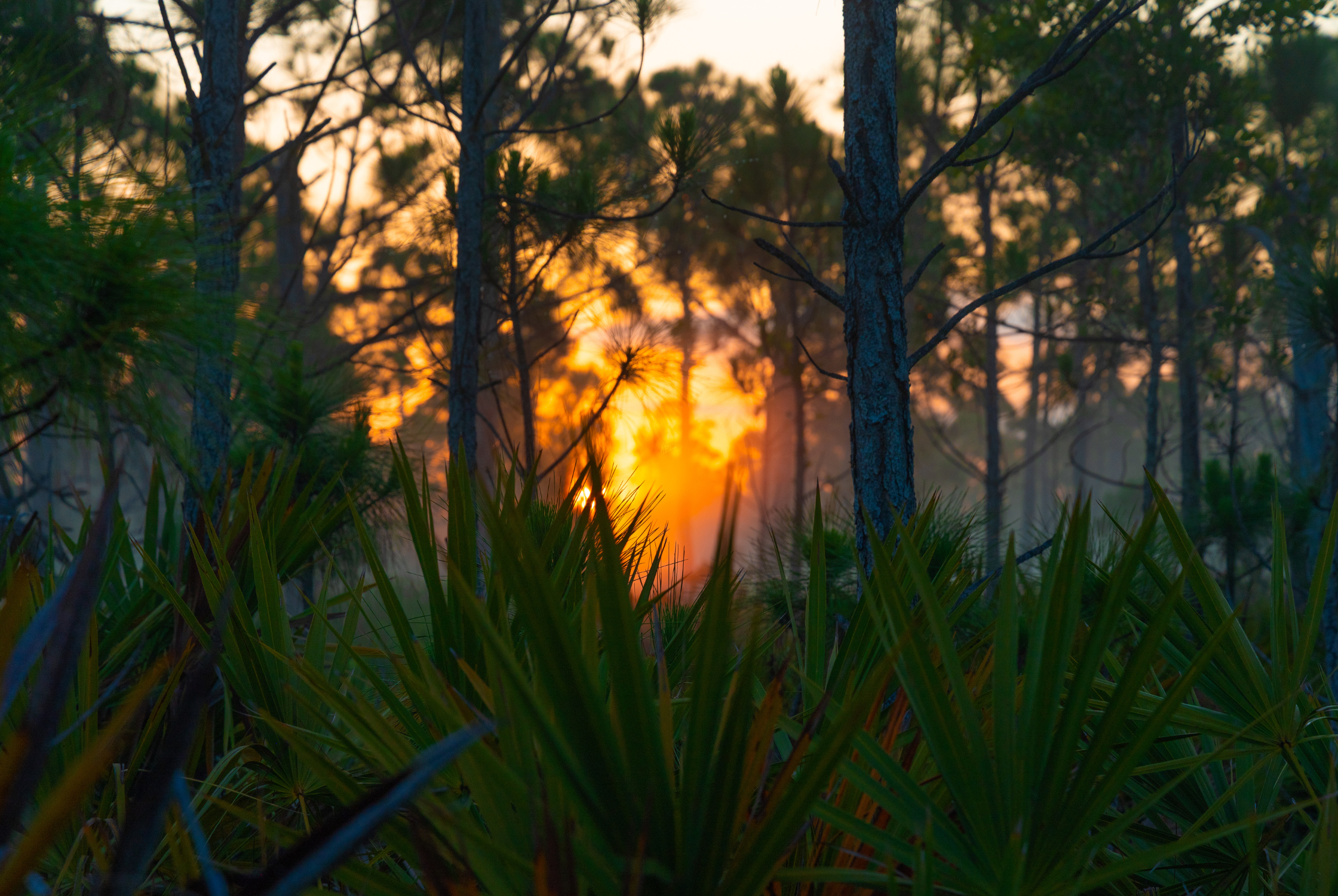
A fire-like sunrise captured towards the beginning of Catfish Trailhead at Charlotte Preserve State Park on a slightly foggy morning. Photo by Anna Tripp (@truetripp)
This guest blog post was written by a Conservation Florida supporter. From one Floridian to another. We hope you enjoy!
I like to think I know Florida pretty well. I was raised in Jacksonville, and my family was big on taking trips to the springs, coastal dive sites, hiking areas, and small towns. We love exploring our state and that has always been part of me. Last year, I ended up back in Florida after a few years of working across the U.S. I had the opportunity to be a part of a month-long project, where I was based in Southwest Charlotte County, an area of Florida I had never been to or heard of. At first, I felt the area was asleep. It was rare to find young adults, there were no real major stores, and there had been developments left unfinished. It was clear Charlotte County came alive with people during the winter, but for the summer, I was pleasantly surprised it came alive with nature.
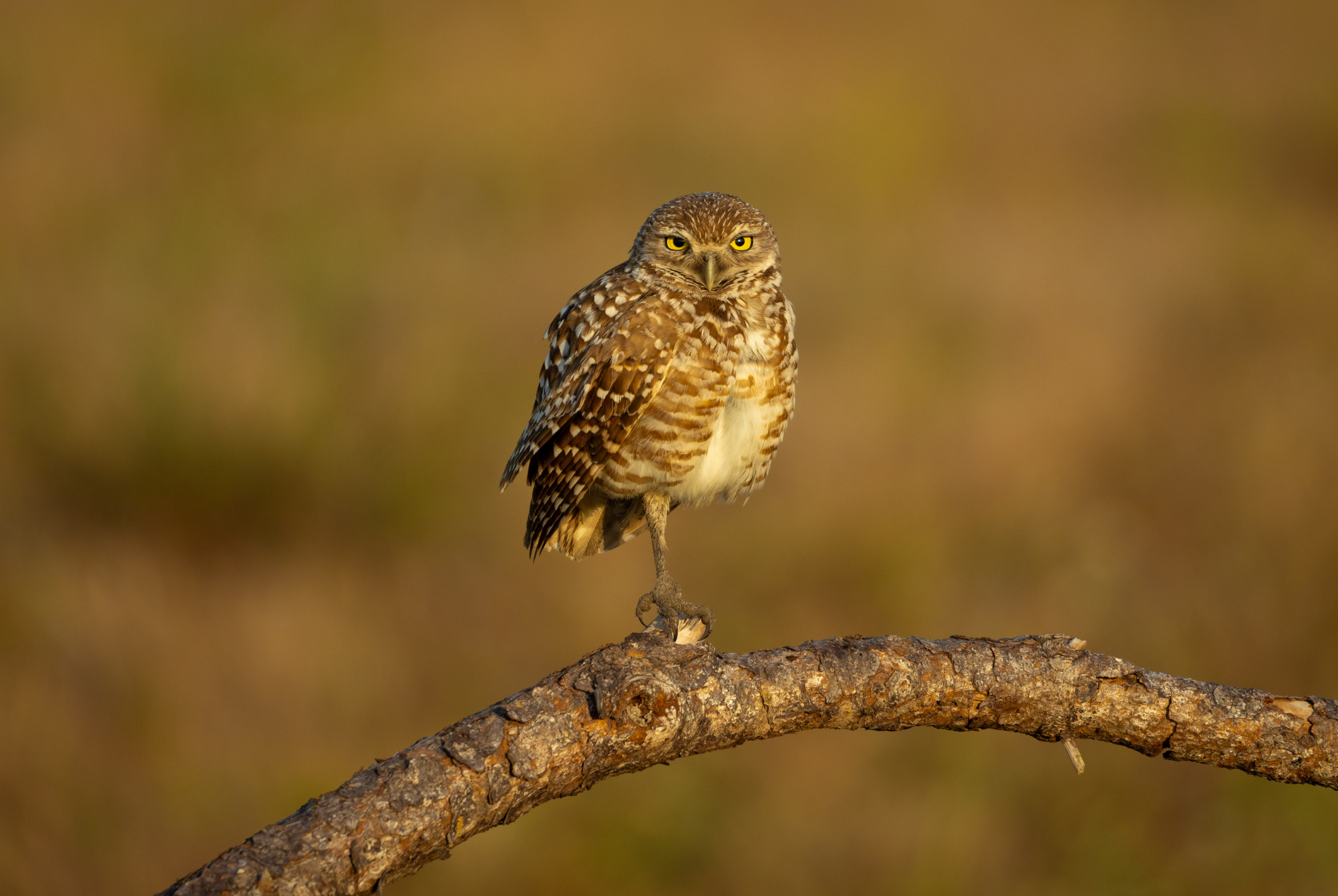
Male burrowing owl (Athene cunicularia) guarding his borrow above ground, from a fallen branch. Photo by Anna Tripp (@truetripp), taken on a 150-600mm lens to give wildlife significant space.
Everyday for a month, I’d wake up before sunrise to see if there was sea turtle activity at Gasparilla Island State Park south of Boca Grande (Lee County). There usually wasn’t, so I would have the entire morning ahead of me to explore, before the heat became unbearable. Observing the burrowing owl families at an abandoned development site quickly became a favorite routine of mine, especially when the awkward, yet quirky owlets began to emerge from their burrow.
Truthfully, I could not believe how accessible it was in general to view wildlife in this part of Florida. I did not have to go on a boat, long drive, or deep hike to find a unique sight to capture. One day, on my way back to the Airbnb, I saw a sign for Amberjack Environmental Park. Naturally I took the turn to go explore. At the trailhead I immediately noticed a “field” of sunshine mimosa plants filled with hundreds of buzzing bees. And, after a short walk to the end of the trail, I encountered hundreds of fascinating birds wading in Lemon Creek, foraging for food.
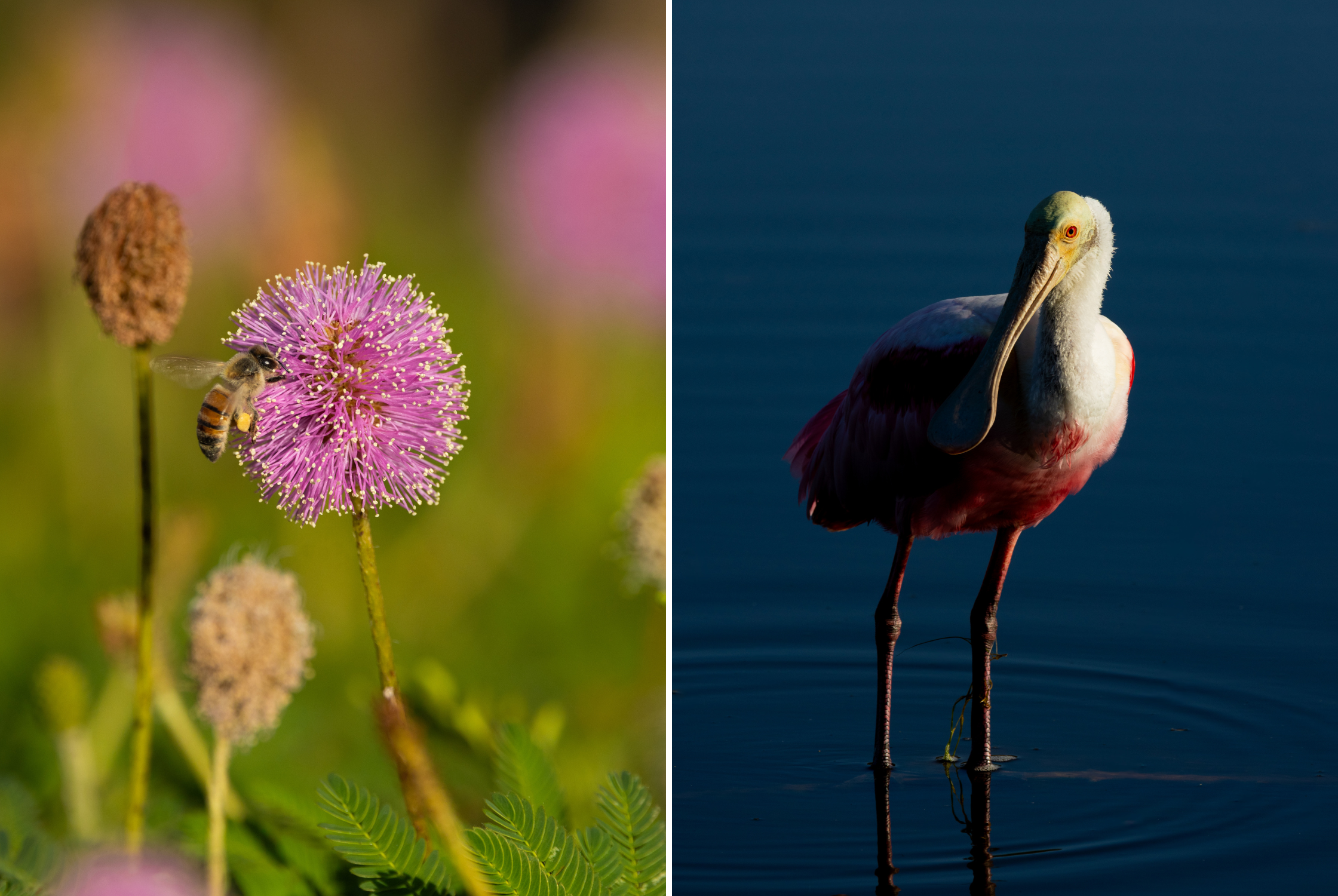
Left: A bumblebee pollinating a sunshine mimosa (Mimosa strigillosa) plant during the bright pink “powderpuff” bloom. Right: A roseate spoonbill (Platalea ajaja) wades in the open area of Lemon Creek at Amberjack Environmental Preserve. Photos by Anna Tripp (@truetripp), taken on a 150-600mm lens to give wildlife significant space.
This was just a glimpse of the effortless natural beauty of Charlotte County. There were many more memorable sights and scenes during my month-long venture. It’s truly wild to me that even though I grew up exploring Florida, there are still so many pockets of paradise left to be seen and experienced, almost as if there are never-ending wonders. You too can discover the wild worth protecting, even in your “backyard.”
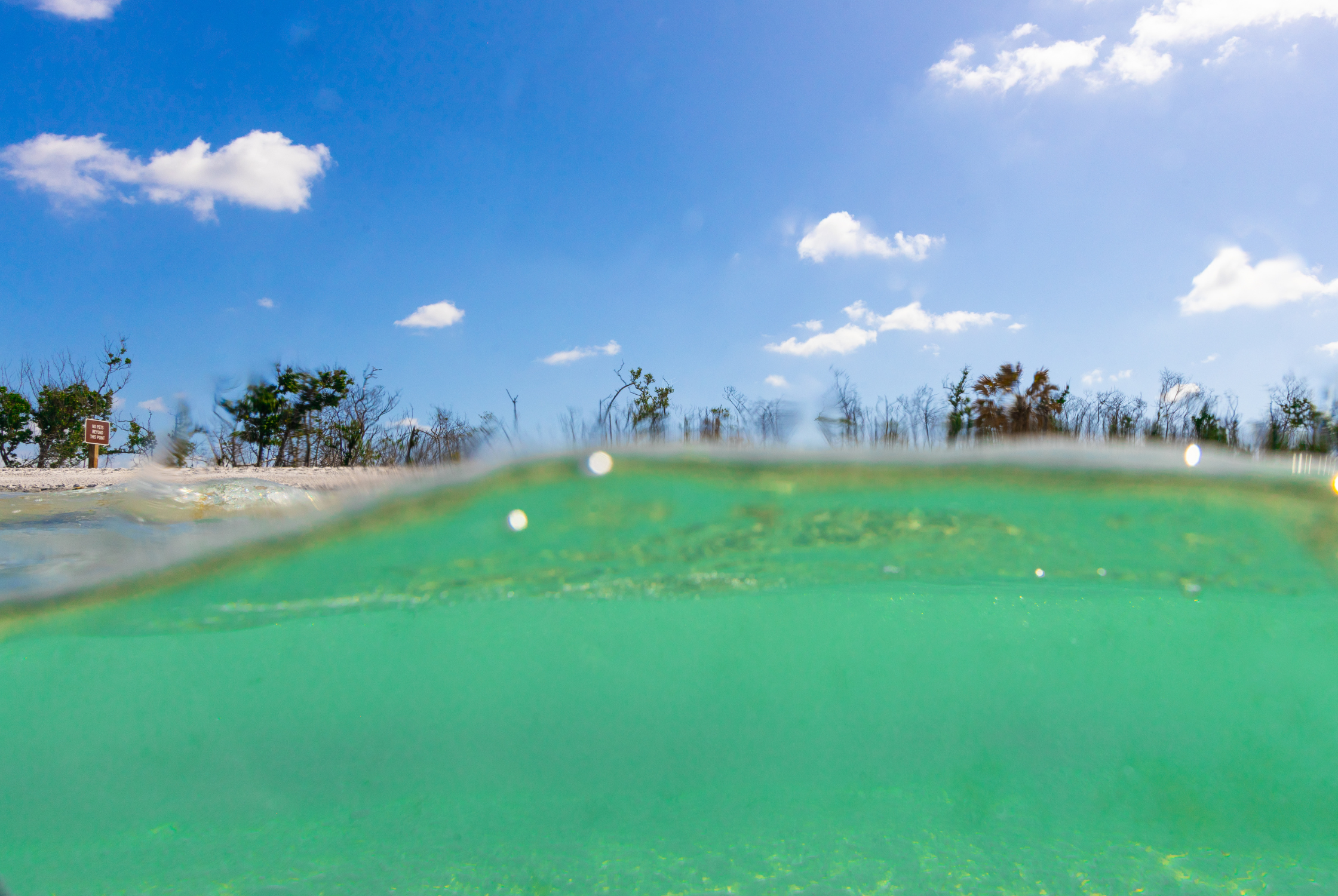
The clear, aquamarine Gulf water at the remote beach of Don Pedro Island State Park, accessed via kayak. Photo by Anna Tripp (@truetripp)
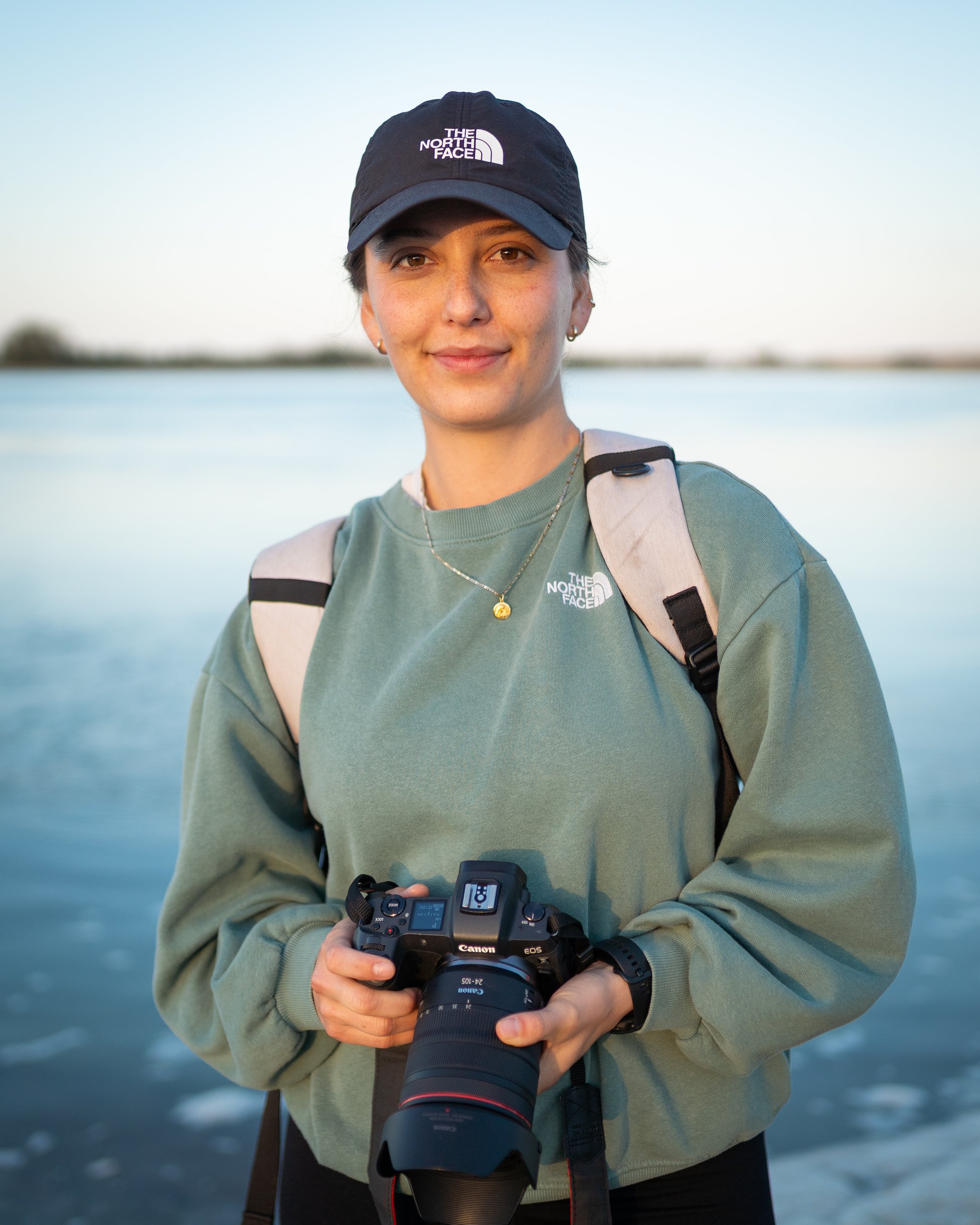
Guest blog author Anna Tripp
in case you missed it:
About Conservation Florida:
Conservation Florida is an accredited, nonprofit land conservancy dedicated to conserving the Sunshine State’s water, wildlife, wild places — the places that make Florida home. Since its founding in 1999, Conservation Florida has saved more than 45,000 acres, serving all 67 counties in Florida, by prioritizing strategic and evidence-based land protection, education, and advocacy. Learn more at conservationfla.org and follow us on social media @conservationflorida.